
Money unpaid? Contract broken?
Business debts, unpaid construction progress payments, tenants who do not pay rent, or a party who does not honour an agreement. These are all civil claims.
WhatsApp us now Or fill in a short formUsual steps
- Gather documents: the agreement, invoices, messages, proof of payment and proof of delivery.
- A letter of demand, to give a chance to settle without going to court.
- If not settled: a writ and statement of claim in the appropriate court.
- If the defendant does not enter an appearance within 14 days after the writ is served, default judgment may be entered for a claim for a liquidated sum (Order 12 rule 4 and Order 13 rule 1, Rules of Court 2012).
- If the defendant has no real defence, summary judgment may be applied for (Order 14 rule 1).
Do not wait too long
- Actions founded on contract may not be brought after 6 years from the date the cause of action accrued (section 6(1)(a), Limitation Act 1953).
Frequently asked questions
How long do I have to make a claim?
Actions founded on contract may not be brought after 6 years from the date the cause of action accrued (section 6(1)(a), Limitation Act 1953).
Do I need to go straight to court?
Usually a letter of demand is sent first, to give a chance to settle without going to court. If it is not settled, a writ and statement of claim are filed.
What if the other party does not turn up?
If the defendant does not enter an appearance within 14 days after the writ is served, default judgment may be entered for a claim for a liquidated sum (Order 12 rule 4 and Order 13 rule 1, Rules of Court 2012).
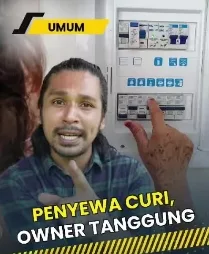
Watch the video explainer
This video loads from TikTok only after you tap. TikTok may use its own cookies.
How we help
- Assess your documents and the strength of your claim, or your defence if you are being sued.
- Prepare the letter of demand and file the action.
- Represent you in court through to judgment and its enforcement.
Legal references
- Orders 6, 12, 13, 14, 18 and 34, Rules of Court 2012 (original 2012 text; later amendments not yet checked)
- Section 6(1)(a) and 6(3), Limitation Act 1953 [Act 254]
The law can change; check with a lawyer for your case.
Updated 15 November 2026. General information, not legal advice on your case.
Book a consultation
WhatsApp us, or fill in a short form. No need to give case details there.
WhatsApp us nowOr fill in a short form